Sustaining the Shield: How Servicing Supports Proliferated Defense Architectures
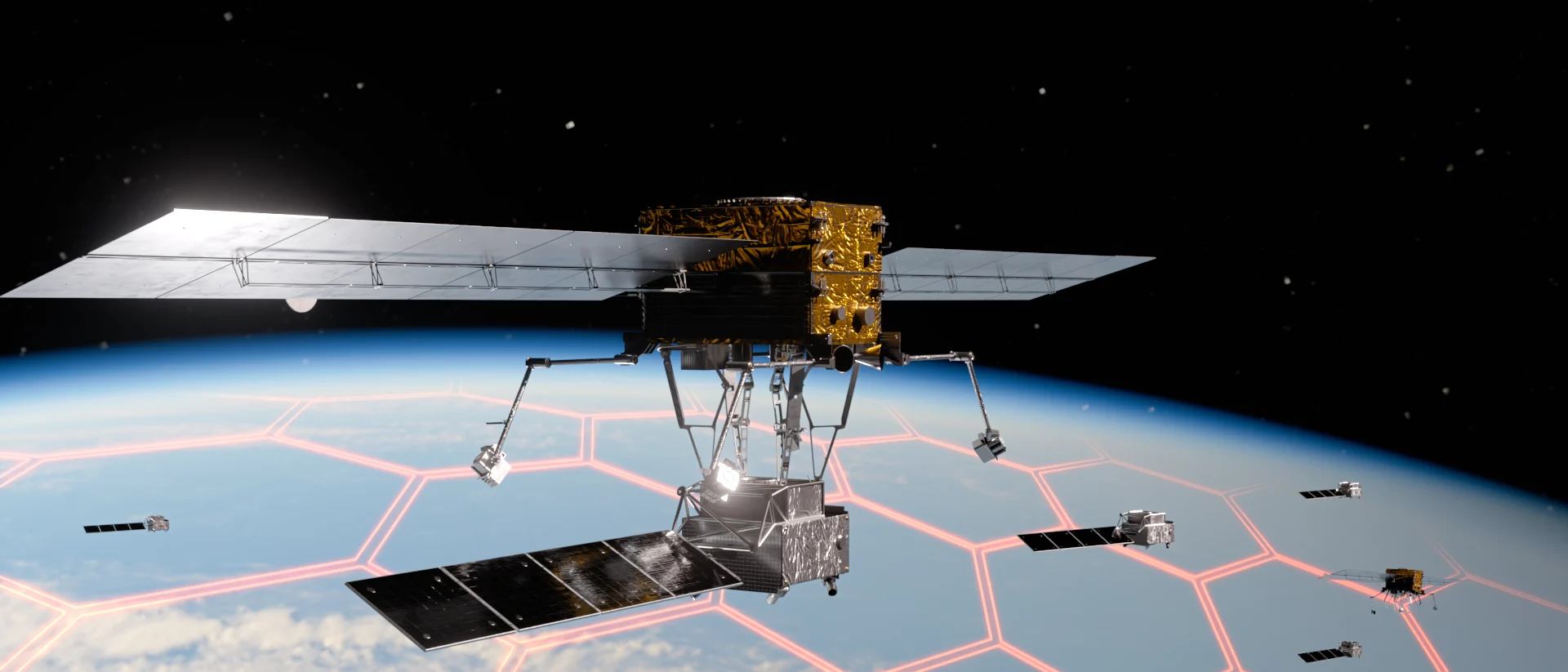
The United States Space Force (USSF) faces a strategic inflection point: Launching more satellites is no longer enough to ensure superiority. Military space systems, like the Golden Dome for America, must be logistically supported by servicing the same way terrestrial systems are.
During a panel discussion at GovMilSpace 2026 during SATShow, Dr. Clare Martin, our Executive Vice President, joined other space leaders to explore the role of on-orbit servicing in enabling resilient space architectures. The industry experts included Robert Hauge, President of SpaceLogistics, John Moberly, Chief Growth Officer at Ibeos, and Ryan Wolf, Program Director for Tranche 0 and Vendor Growth at Space Development Agency, and was moderated by Valerie Moon, Executive Director, Institute for Critical Infrastructure Technology.
Clare and her peers agreed that integrating a servicing layer would unlock new levels of mission assurance, strategic deterrence, and operational readiness in an increasingly contested domain. Here are more key takeaways from the thoughtful conversation:
Space logistics are essential infrastructure for long-term sustainability and operational advantage.
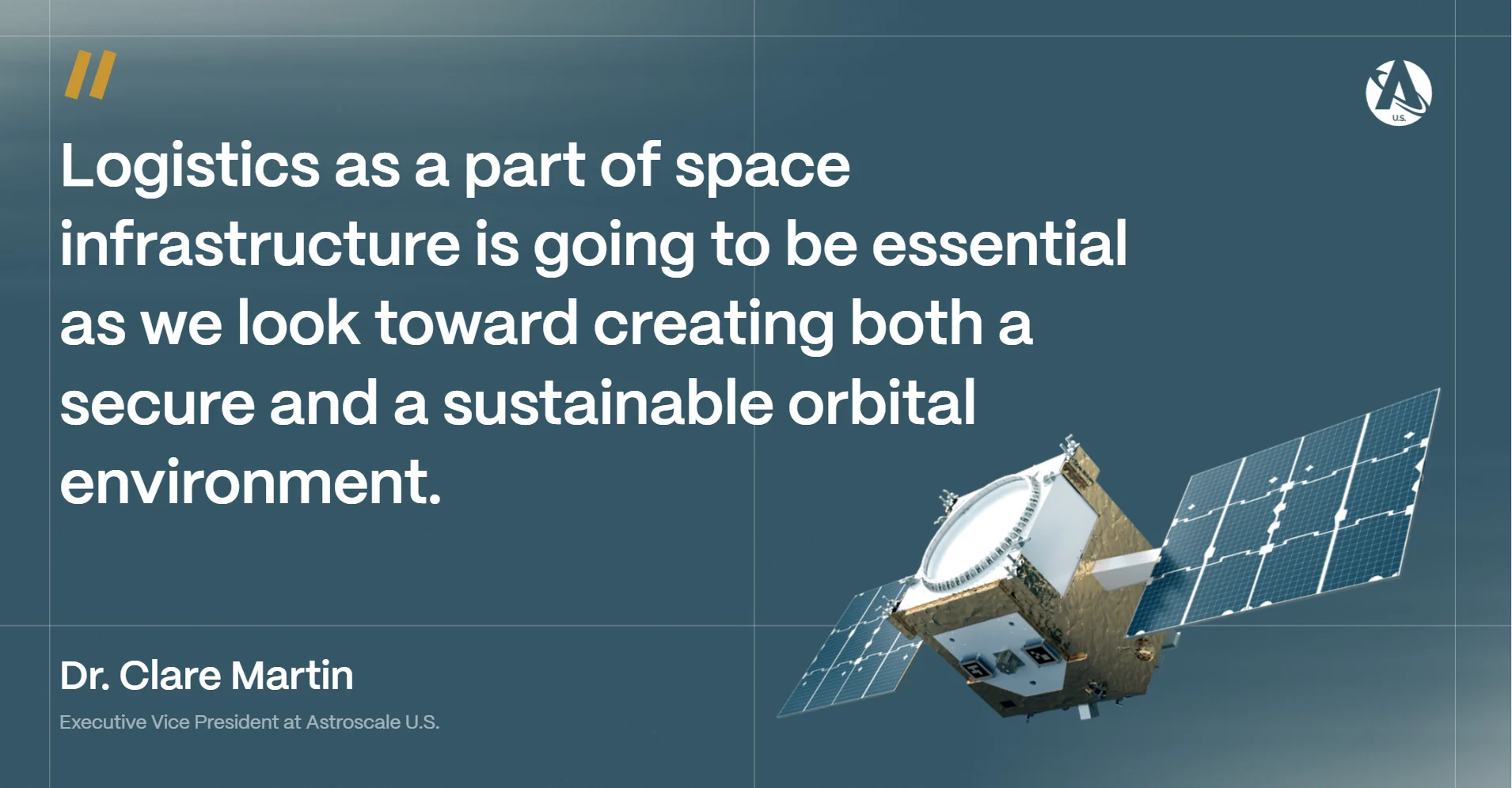
Space operations are slowly shifting from a launch-and-replace formula to a new sustain-and-operate philosophy, and the panel agreed that logistical elements like refueling, repair, maneuvering, and inspection will underpin both commercial and national security architectures. Clare emphasized that logistics must be viewed as a foundational infrastructure layer, not a niche capability, especially for building a “secure and sustainable orbital environment." "We need people to reconceive the way that we’re using space, thinking about servicing and infrastructure from the start when designing missions and constellations," she said.
Clare tied logistics directly to both sustainability and security, emphasizing that infrastructure is essential for maintaining strategic advantage and responsible orbital operations by supporting:
-Mission longevity
-Resilience
-A safe orbital environment
-Expanded operational concepts
Rethinking space & baking service in from the beginning.
Clare called out the need to stop one-off mission thinking and instead integrate servicing into how they are conceived from the start. The final phase shouldn’t be discarding an asset; instead, we need to pivot towards upgrading and reusing it.
She also stressed the need to bring servicing into the design phase rather than treating it as an afterthought—think satellites built with refueling ports, interfaces for upgrades, and compatibility with servicing systems. The panel also pointed out that different sustainment strategies are needed for different orbits. While high-value satellites in GEO will require servicing and refueling, replacement and de-orbit is more crucial for lower-cost, proliferated constellations in LEO.
The future is a full-service ecosystem. Refueling is just the start.
Clare stressed that while refueling, which Astroscale U.S.’s Provisioner provides, is a strong move in the right direction, multiple integrated services are required to form a complete ecosystem. A mature space logistics system will include:
-Refueling
-Life extension
-Inspection
-Repair
-Debris removal
-Maneuver
Sustained demand and funding are the missing links.
Scaling has stalled, despite the technology being ready. The space industry has demonstrated key capabilities but budget commitments, programs of record, and other long-term procurement signals are required for growth. “We’ve got a good start, but I honestly believe that we can—and need to—pick up the pace so that the U.S. can maintain its operational and strategic advantage,” said Clare.
She highlighted that while demand signals like the USSF’s recent request for information regarding in-orbit refueling, the critical gap is the absence of a dedicated budget line for sustainment, which prevents the transition from one-off missions to full-scale operational infrastructure.
Success requires a conceptual shift.
The consensus among the panel was clear: Business as usual will no longer suffice. Clare emphasized that redefining mission architectures and business models to be more sustainable and efficient is the key to unlocking entirely new opportunities in space. “We have the technology there to do it. Now we just need to fold it into the way that we think about space.”
Read more about our perspective on logistics in military space operations here.
All Categories
Recent Posts